On a survivor call recently, two people said they were having a hard day.
Both of them are new to this. Both of them are fighters — the kind who answer how are you with the whole list and then, without stopping for breath, the plan. The headaches, and the appointment already on the calendar. The fatigue, and the way they’ve started shaping the day around it. The thing that scared them last week, and what they did about it. They hand you the hard part and the handling of it together, and you believe them, because they’re right. They’re doing good.
We have all done that. You could watch it land on the call — everyone nodding, because none of it was new to any of us.
Which is why the hard day landed the way it did. Neither of them is built for saying this one got me out loud to a room of near-strangers. They said it anyway.
What they said next is why I’m writing this.
They said it helped to hear from the people further out. Not because we have it figured out. Because we’re still here, and we’re doing things.
I didn’t have anything ready that day. So I’m writing it now.
Here is what is true seven years later.
I’m tired in a way sleep doesn’t touch. A word I’ve known my whole life goes missing and I talk around it while everyone waits. A hot flash arrives in the middle of a sentence and I finish the sentence. I can watch my own reaction swell past what the situation deserves, know it’s too big, and not be able to stop it. I run the math on every day before I spend it. I wrote about all of that here, so I won’t do it twice.
None of it is going away. I stopped waiting for it to.
So here is the encouragement, which is the actual reason for this post.
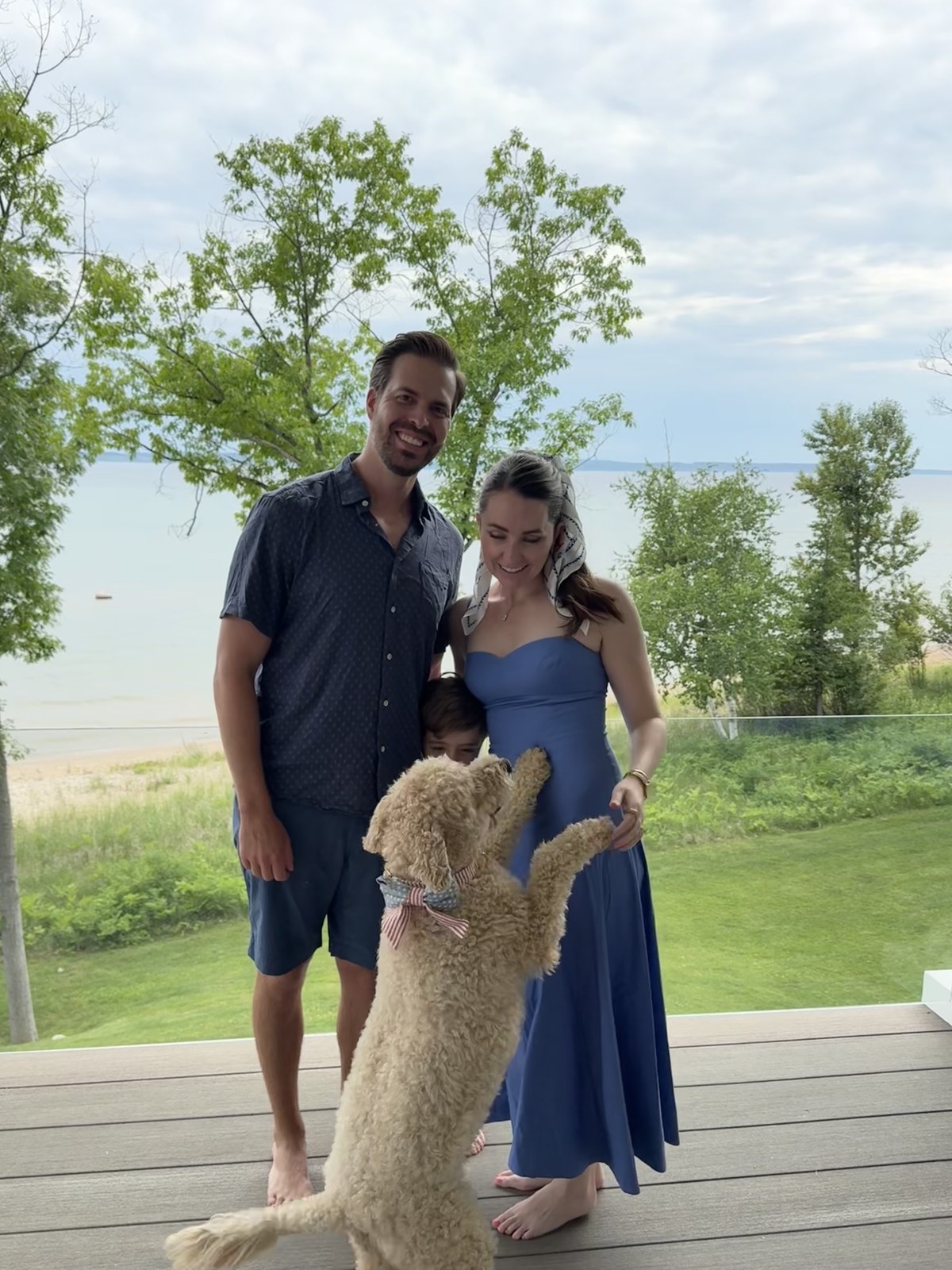
I have a family I am so proud of I can hardly stand it.
Patrick has read every version of the worst of it. Before that, he sat through it. When they took me in for brain surgery, they told him four to eight hours, and it used every minute. He sat in a waiting room that was full of sunlight, phone in both hands, elbows on his knees, looking up at a status board. What if she can’t walk. What if she can’t talk. What if she doesn’t know who I am. What if she doesn’t wake up. My mom was sitting right there and he barely spoke to her.
I know all of that because he wrote it. It’s a chapter of this book — he went back into the worst day of his life on purpose, on paper, where people can read it.
Trip wasn’t there for the brain surgery. He was there for the years after it. He spent more time on that couch with me than a little kid should. Coloring, running back and forth to the marker bin, doing puzzles, folding paper airplanes, on days he’d clearly rather have been running wild at a playground. I couldn’t get up. He stayed anyway. He learned young how to be gentle with somebody.
Rye, my cuddly goldendoodle, is the best heating pad I have ever owned. I’ve joked about it for years because it’s true. She would spend an entire day lying on me if I let her, and she never once asked how I was feeling.
Then there’s the book.
Writing it meant going back into all of it on purpose. And I had to do it with the brain described above. The tired one. The one that loses a word and has to go the long way around it.
I wrote about the worst days of my life on days that were not good either. You don’t get to be finished with something before you write it down. You go back in while you’re still standing in it, and then you do that again the next day, for years.
I also started a company — the newest thing on this list, and the most refreshing part of the latest stretch of my life.
None of that happened because I got better. All of it happened while I wasn’t getting better. It took me a long time to understand that those weren’t in competition.
The list isn’t really the point.
The point is what’s underneath it, which is that I stopped waiting to become someone else. I’m not trying to get back to the woman I was before. She was twenty-seven and she had no idea what was coming. I know things she didn’t. I’m harder to scare. I’m better at saying the true thing out loud, which is most of what this book is.
I’m proud of who I turned into. Not despite the seven years. Because of what I did inside them.
If you’re in the early part of this, you’re not behind. There’s no schedule you’re failing to keep.
The hard days don’t stop being hard. They stop being the whole story, eventually. And somewhere in there you look up and find you built something during them without particularly noticing.
Seven years. Still tired. Still here. Still doing things.
That’s what seven years later looks like from the inside.
I Think I’m Ready to Talk is out now.